
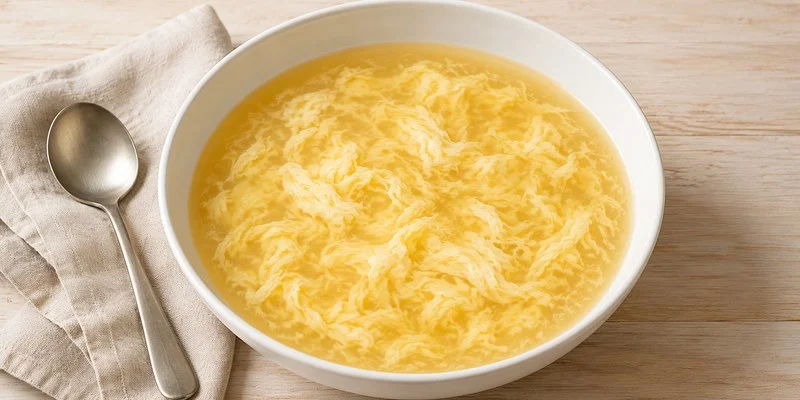
My Diverticulitis Journey
If you’ve ever had a diverticulitis flare, you already know what I mean when I say nasty. I have diverticulosis, and a couple of years back one of those pouches got infected. The fiber my doctor had been telling me to load up on for years became the one thing I had to avoid completely.
This diverticulitis egg drop soup is what I made over and over in the recovery window: five ingredients, ten minutes, gentle on the gut, real food when nothing in your kitchen feels safe. The approach lines up with the Mayo Clinic diverticulitis diet, which calls for clear liquids first, then a low-fiber recovery phase before fiber is slowly added back.
Quick distinction since people mix these up: diverticulosis is the chronic condition (small pouches in your colon, often discovered during a routine colonoscopy). Diverticulitis is when one of those pouches gets infected. This diverticulitis egg drop soup is built for the recovery phase of a flare, not for diverticulosis maintenance or the acute clear-liquid phase. Always check with your GI before changing what you’re eating after a flare.
Why You’ll Love This Diverticulitis Egg Drop Soup
Here’s what makes this diverticulitis egg drop soup a reliable go-to during flare recovery:
- It’s done in 10 minutes. Five minutes prep, five minutes cook. Active stirring time on this diverticulitis egg drop soup is about 90 seconds.
- It’s gentle. No fiber, no irritants. Nothing on the standard “avoid during flare” list.
- It’s actually filling. Two large eggs in a bowl of broth gives you about 12 grams of protein per serving, enough to feel like a real meal, not a placeholder.
- It freezes badly, but it reheats fine. Make a fresh batch in 10 minutes whenever you need it. Don’t bother with leftovers.
- It scales. Doubling or tripling for the household? Just keep the cornstarch slurry ratio (1 tbsp cornstarch per 2 tbsp water per 4 cups of broth) consistent.
Ingredients
You need exactly five things to make this diverticulitis egg drop soup. That’s part of why this recipe works during a flare: fewer ingredients means fewer variables, which means fewer ways your gut can object.
If you have Whole Foods in your area, you can get all five of these gentle, low-residue staples with same-day delivery here: Whole Foods same-day delivery.
- 4 cups low-sodium chicken broth: use Pacific Foods Organic, Kettle & Fire, or homemade. Avoid bone broth if you’re not sure how your gut tolerates fat right now; the gelatin can feel heavy in the low-residue phase.
- 1 tablespoon cornstarch: Bob’s Red Mill is reliably pure cornstarch, no anti-caking agents. If you’re gluten-free, double-check the label; most cornstarch is gluten-free but cross-contamination happens.
- 2 tablespoons cold water: for the slurry. Cold matters; hot water will clump.
- 2 large eggs, well-beaten: room temperature pours into hot broth in cleaner ribbons than cold-from-the-fridge.
- ¼ teaspoon salt: or to taste. Your low-sodium broth still has some sodium; start light.
Optional add-ins (skip during an active flare, add later as tolerated):
- â…› teaspoon white pepper. Traditional, but some flare-state guts find it irritating. Skip the first time you make this.
- ½ teaspoon toasted sesame oil. Adds depth, but adds fat. Skip if your gut is still touchy on fats.
- ½ cup well-cooked white rice. Stir in at the end for a fuller, more meal-like version once your GI clears you for soft solids.
How to Make Diverticulitis Egg Drop Soup
- Whisk the slurry. In a small bowl, whisk the cornstarch and cold water until smooth. Set aside. This is what gives the broth its silky body; without it, you’ve got egg in broth instead of diverticulitis egg drop soup.
- Heat the broth. Pour the 4 cups of broth into a medium saucepan. Bring to a gentle simmer over medium heat. You’re looking for small bubbles around the edge, not a rolling boil.
- Add the slurry. Stir the cornstarch slurry one more time (it settles fast), then slowly pour it into the simmering broth while stirring with a whisk or fork. You’ll feel the broth thicken slightly within about 30 seconds. Reduce heat to low.
- Stream the eggs. Beat the eggs one more time so they’re fully blended. Then (this is the only technique moment in the whole recipe) slowly drizzle the beaten eggs into the broth in a thin, steady stream while gently stirring the broth in a slow circle with a fork. The hot broth cooks the eggs instantly into silky ribbons.

- Season and serve. Remove from heat the second the eggs are in. Stir in the salt, and any optional white pepper or sesame oil. If you’re adding cooked rice, gently stir it in now. Ladle into bowls and serve hot.
That’s it. Ten minutes, start to bowl.
Tips for Getting It Right
A few small tricks make a real difference when you’re making this diverticulitis egg drop soup:
- The slurry temperature matters. Cold water + room-temperature cornstarch + slow pour into hot broth = silky. Hot water or fast pour = lumps.
- Don’t boil the broth when adding the eggs. A gentle simmer is what gives you ribbons. A rolling boil scrambles them.
- Beat the eggs more than you think you need to. A fully homogenized egg pours in cleaner ribbons. A barely-beaten egg gives you uneven curds.
- Adjust the thickness. If you want thicker soup, increase the cornstarch slurry to 1.5 tablespoons cornstarch + 3 tablespoons water. If you want thinner, drop to ½ tablespoon cornstarch + 1 tablespoon water.
- Salt last, taste twice. Low-sodium broths vary. Start with ¼ teaspoon, taste, add more only if needed.
Common Mistakes to Avoid
Watch out for these when you make this diverticulitis egg drop soup:
- Boiling instead of simmering is the single most common mistake. A rolling boil shreds the eggs and ruins the texture.
- Adding the slurry to cold broth keeps the cornstarch from activating. Always add slurry to broth that’s already simmering.
- Stirring too aggressively when streaming the eggs breaks the ribbons. You want gentle motion, not a vortex.
- Skipping the slurry leaves you with egg in broth: fine, but not egg drop soup.
- Adding off-list ingredients during a flare. Green onions, mushrooms, corn, tofu cubes, and fresh ginger are all standard egg drop soup additions, and all on the “avoid during flare” list.
Variations (For After the Flare)
Once your GI clears you to expand back to normal fiber, this diverticulitis egg drop soup becomes a base you can build on:
- Add cooked white rice for a fuller, stew-like version (still gentle).
- Stir in shredded cooked chicken breast for more protein.
- Add a swirl of toasted sesame oil and a small pinch of white pepper for the traditional finish.
- Top with chopped scallion greens (the green part is lower fiber than the white part) once you’re back to tolerating raw aromatics.
Storage and Reheating
Here are my recommendations for storage and handling your diverticulitis egg drop soup:
Storage: Honestly, don’t bother. The eggs go from silky to rubbery in the fridge, and the cornstarch thins out. Make a fresh batch in 10 minutes when you need it.
If you must store: Refrigerate in an airtight container for up to 2 days. Reheat gently on the stovetop over low heat, stirring constantly. Don’t microwave; it rubberizes the eggs.
Freezing: Don’t. The texture wrecks completely.

The Best Cookbook for Diverticulitis Recovery
When you’re past the acute flare and ready to expand beyond a handful of ten-minute recipes, a dedicated diverticulitis cookbook saves you the trial-and-error I went through. The one I keep recommending is built around the same 3-stage recovery model your gastroenterologist probably described: clear liquids, low-residue recovery, and gradual fiber reintroduction.


Save This Recipe for Later
Pin this one so you can find it fast the next time a flare lands and you need a gentle, gut-safe meal in ten minutes.
FAQs
Here are the questions readers ask most about diverticulitis egg drop soup.
Is diverticulitis egg drop soup safe during a flare?
Yes – most gastroenterologists greenlight this kind of broth-based recipe during the low-residue phase that follows the initial clear-liquid window. The eggs deliver gentle protein without fiber, the broth digests easily, and the texture feels safe in your gut when nothing else does. Always confirm timing with your own GI before reintroducing solids after a flare.
Can I make this recipe gluten-free?
Diverticulitis egg drop soup is naturally gluten-free if you use pure cornstarch (most brands are) and a certified gluten-free chicken broth. Pacific Foods Organic and Kettle and Fire both qualify. Read every label – some brands sneak wheat-based flavorings into stock. Eggs, water, and salt are inherently gluten-free, so the recipe is safe for celiac readers.
How many calories are in diverticulitis egg drop soup?
A single serving (about two cups, made with low-sodium chicken broth and one egg per bowl) lands at roughly 145 calories. Most of that comes from the eggs, which contribute about 70 calories each. Broth and cornstarch add only minor calories. Adding cooked white rice bumps each serving to roughly 200 to 230 calories total.
Can I substitute vegetable broth for chicken broth?
You can swap vegetable broth into diverticulitis egg drop soup, but read the label carefully – many vegetable broths contain onion, garlic, celery, or leek, which can irritate a recovering gut. Look for a broth labeled low FODMAP, or simmer your own from carrot and a small bay leaf and strain it completely smooth before using.
Is diverticulitis egg drop soup safe for diverticulosis without a flare?
Yes, you can eat it with diverticulosis, but it isn’t the right everyday meal for long-term diverticulosis maintenance, which actually calls for more fiber, not less. Use this recipe sparingly – sick days, queasy stomachs, post-procedure recovery – and lean on higher-fiber whole grains, beans, and fresh produce the rest of the week to support gut health.
How long does it keep in the fridge?
Refrigerated diverticulitis egg drop soup holds for up to two days in an airtight container, but the texture suffers. Eggs turn rubbery, the cornstarch thins, and the silkiness disappears. Reheat gently on the stovetop over low heat with constant stirring; never microwave. Honestly, you are better off making a fresh ten-minute batch when hunger hits.
Can I add rice or chicken to diverticulitis egg drop soup?
Yes – well-cooked white rice and shredded poached chicken breast are both safe additions during the low-residue recovery phase. Stir rice in at the end so it warms through without overcooking. Wait until your GI clears soft solids before adding chicken. Skip green onions, ginger, mushrooms, and other traditional toppings until you have reintroduced fiber successfully.
Final Thoughts
Diverticulitis egg drop soup is the recipe I wish someone had handed me on day three of my first flare. Five ingredients, ten minutes, no fiber, no fat to speak of, and just enough protein to feel like a real meal instead of a placeholder. The texture is forgiving, the technique is simple, and the ingredients are pantry-shelf staples you probably already own.
If your GI has cleared you for the low-residue phase, this is a safe, dignified, repeatable bowl to lean on while your gut settles. Make it once. Then make it again tomorrow. The whole point is that recovery food should feel like food.
More Recipes Like This
If you liked this diverticulitis egg drop soup, these LDD guides cover the surrounding territory:
- Diverticulitis Foods to Eat: the master list of what’s safe during each phase of recovery.
- Diverticulosis Foods to Eat: for the long-term maintenance phase after you’ve recovered.
- Low-Fat Turkey Meatball Soup: another gentle soup built for digestive recovery, this time with a gallbladder-friendly low-fat angle.
- High Protein Salmon Salad: a protein-first lunch for GLP-1 readers who need something filling but not heavy.
- 21 Low FODMAP Snack Ideas: gut-friendly snacks for IBS and digestive-sensitive readers.
- For a softer low-fiber recovery-style meal, this chicken and rice soup for diverticulitis keeps the seasoning mild and the texture gentle.
Recipe Card
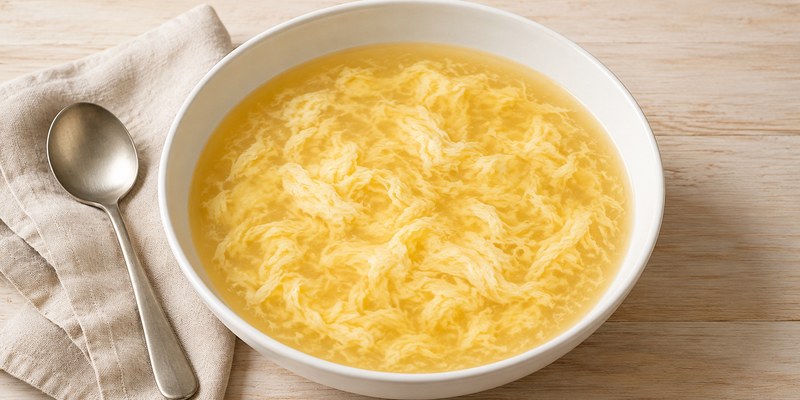
- 4 cups low-sodium chicken broth
- 1 tablespoon cornstarch
- 2 tablespoons cold water
- 2 large eggs, well-beaten
- 1/4 teaspoon salt
- Whisk the cornstarch and cold water in a small bowl until smooth. Set aside.
- Pour the broth into a medium saucepan. Bring to a gentle simmer over medium heat.
- Slowly pour the cornstarch slurry into the simmering broth while stirring. Reduce heat to low.
- Beat the eggs one final time. Slowly drizzle the beaten eggs into the broth in a thin, steady stream while gently stirring the broth in a slow circle.
- Remove from heat. Stir in the salt. Serve hot.
